Hantavirus Quarantine Begins in Nebraska | U.S. Passengers Under CDC Monitoring
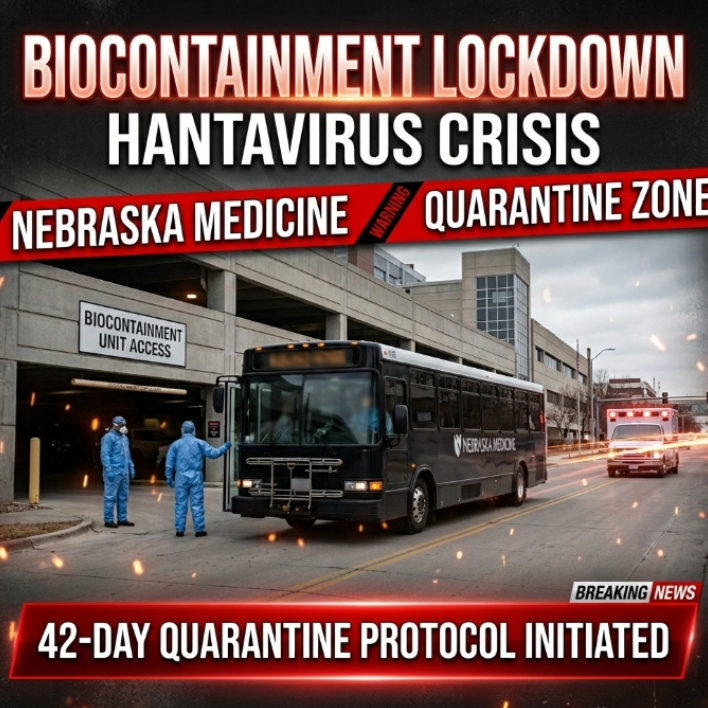
U.S. passengers exposed to hantavirus arrived in Nebraska for 42-day monitoring as health officials assess risks linked to the deadly cruise ship outbreak.
Article
Seventeen American passengers exposed to the Andes strain of hantavirus aboard the cruise ship MV Hondius arrived at the University of Nebraska Medical Center early Monday to begin medical monitoring tied to a 42-day observation period recommended by global health authorities. Shuttle buses and emergency vehicles were seen entering the facility as federal and local health officials coordinated the transfer process, according to hospital officials and Reuters reports.
Hantavirus Patients Moved to Specialized Nebraska Units
According to the U.S. Department of Health and Human Services, one American passenger tested mildly positive for the Andes hantavirus strain, while another showed mild symptoms during repatriation from the Canary Islands. Both individuals were transported in biocontainment units before arrival in Omaha.
The remaining passengers were transferred to the National Quarantine Unit at Nebraska Medicine for assessment and observation. Officials at the medical center stated that the facility was specifically designed for high-risk infectious disease monitoring and previously handled Ebola and early COVID-19 response operations.
Why the 42-Day Monitoring Period Matters
The World Health Organization identified the outbreak strain as Andes virus, one of the rare hantavirus variants capable of limited person-to-person transmission. Health experts emphasized that transmission typically requires prolonged close contact and does not spread easily through casual exposure.
The outbreak linked to the MV Hondius has already resulted in multiple confirmed infections and at least three deaths internationally, prompting coordinated evacuations involving the United States, France, Canada, and several European countries.
The Broader Public Health Signal
The Nebraska operation reflects how U.S. health agencies are rebuilding rapid-response infectious disease systems after the COVID-19 pandemic. The use of federal quarantine infrastructure, military-linked transport logistics, and specialized pathogen centers demonstrates a renewed emphasis on containment preparedness for emerging global outbreaks.
Public reaction on social media remained mixed, with some users expressing concern over quarantine protocols and others pointing to assurances from infectious disease experts that the overall public risk remains low. Discussions online also focused on Nebraska’s recurring role in handling high-profile infectious disease emergencies.
Watch the video