El Niño 2026 Alert | Super El Niño Risks Rise Fast | NOAA Climate Warning
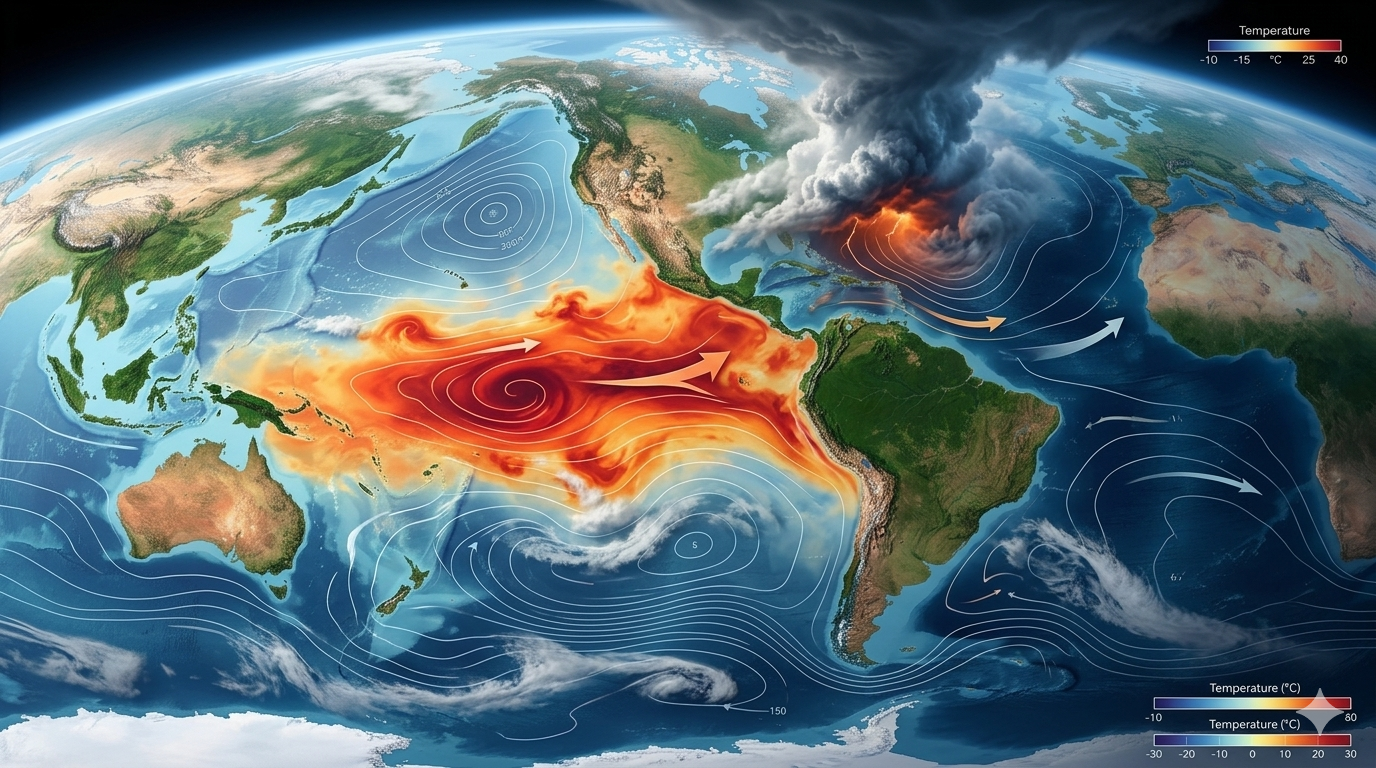
A rapidly strengthening El Niño pattern is developing across the tropical Pacific Ocean, with forecasters at the National Oceanic and Atmospheric Administration warning that the climate event could evolve into a rare and historically powerful “Super El Niño” by late 2026. According to updated projections released by NOAA’s Climate Prediction Center, there is now roughly a two-thirds probability that El Niño will reach strong or very strong intensity levels during its peak season in the Northern Hemisphere winter.
Climate scientists say the accelerated warming of equatorial Pacific waters is occurring faster than earlier forecasts anticipated, increasing concerns over widespread global weather disruption, including severe droughts, extreme heat waves, flooding rainfall, and heightened wildfire danger in multiple regions worldwide.
What Is El Niño and Why It Matters
El Niño is a naturally occurring climate cycle linked to unusual warming in the central and eastern tropical Pacific Ocean. The phenomenon alters atmospheric circulation and shifts global weather patterns, often producing cascading impacts far beyond the Pacific region.
During strong El Niño years, some countries experience devastating floods and storms, while others face prolonged drought and agricultural stress. Scientists also warn that El Niño tends to suppress Atlantic hurricane activity by increasing wind shear across the basin, although it can simultaneously intensify tropical cyclone risks in the Pacific.
According to NOAA experts, El Niño events typically occur every two to seven years and can last between nine and twelve months. Their intensity is measured by how much ocean temperatures rise above normal averages in a key monitoring region along the equatorial Pacific.
Rising Odds of a “Super El Niño”
Meteorologists are increasingly focused on the possibility that this developing system could cross into “Super El Niño” territory, a rare category associated with some of the most disruptive climate episodes in modern history.
Historically, major Super El Niño events — including those recorded in 1982-83, 1997-98, and 2015-16 — triggered billions of dollars in economic losses worldwide through flooding disasters, crop failures, infrastructure damage, and energy market disruptions.
NOAA’s latest assessment indicates ocean temperatures continue climbing steadily, while atmospheric signals are now aligning with classic El Niño development patterns. Forecasters say stronger ocean warming dramatically increases the likelihood of amplified global climate anomalies over the coming months.
Global Temperatures Could Reach New Extremes
Climate researchers also caution that El Niño may temporarily accelerate global warming trends already intensified by human-driven greenhouse gas emissions. Strong El Niño events release additional heat from the Pacific Ocean into the atmosphere, often pushing average global temperatures to record-breaking levels.
Several climate monitoring agencies have warned that the combination of El Niño and ongoing climate change could make 2026 one of the hottest years ever observed globally, particularly if the Pacific warming trend strengthens further through autumn and winter.
The potential impacts extend beyond weather alone. Rising temperatures can strain energy grids, reduce crop yields, increase food insecurity, and intensify public health risks linked to extreme heat exposure.
Economic and Political Pressure Builds Around Climate Risks
The strengthening El Niño forecast is already drawing attention from governments, emergency planners, and commodity markets worldwide. Agricultural sectors in Asia, Africa, and Latin America are closely monitoring rainfall projections, while energy analysts are evaluating possible disruptions to hydropower generation and electricity demand.
Insurance markets and disaster response agencies are also preparing for increased volatility as flood and wildfire risks climb in vulnerable regions. Analysts note that strong El Niño years often reshape global food prices and influence political debates around climate resilience, water management, and infrastructure preparedness.
In financial markets, investors are watching weather-sensitive industries including agriculture, shipping, energy, and insurance, where extreme climate conditions can trigger sudden cost increases and supply chain disruptions.
Social Media Reactions Reflect Growing Climate Anxiety
Discussion surrounding the NOAA warning quickly spread across social media platforms after the updated forecast was released. Many users expressed concern about the possibility of another historic climate event similar to the destructive El Niño episodes of previous decades.
Climate researchers and weather commentators shared graphics showing rapidly warming Pacific Ocean temperatures, while others highlighted fears about heat records, drought conditions, and wildfire seasons in vulnerable regions. Public conversations have also increasingly linked the developing El Niño pattern to broader debates over climate change adaptation and environmental preparedness.
Watch the video